The Complete Guide to Sri Lankan Wesak Lanterns
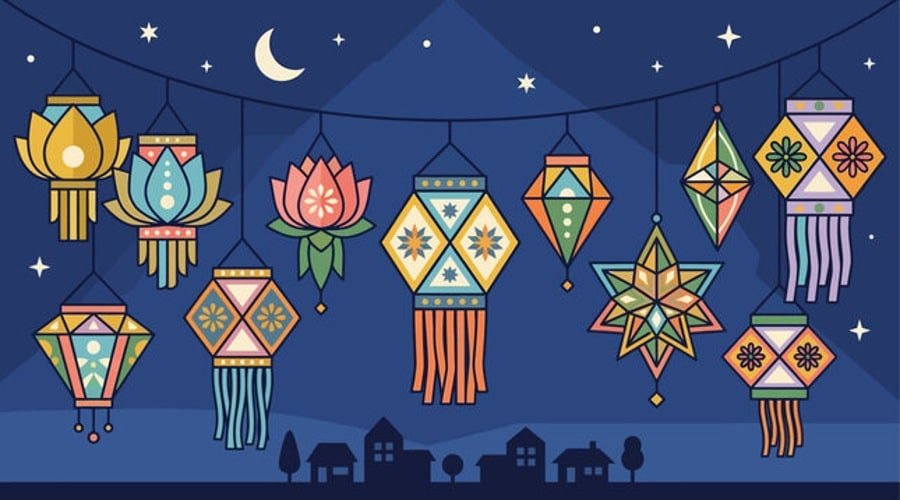
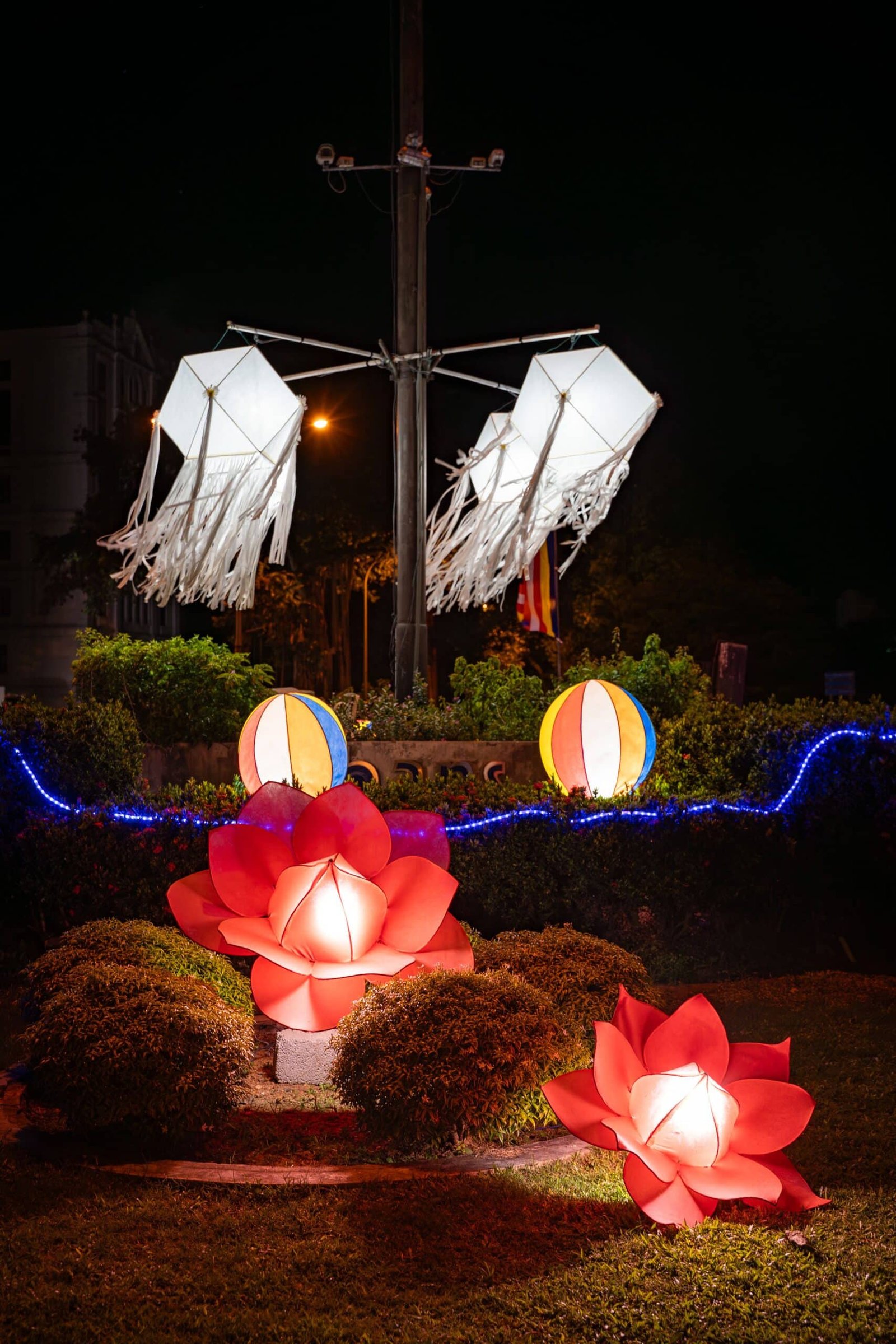
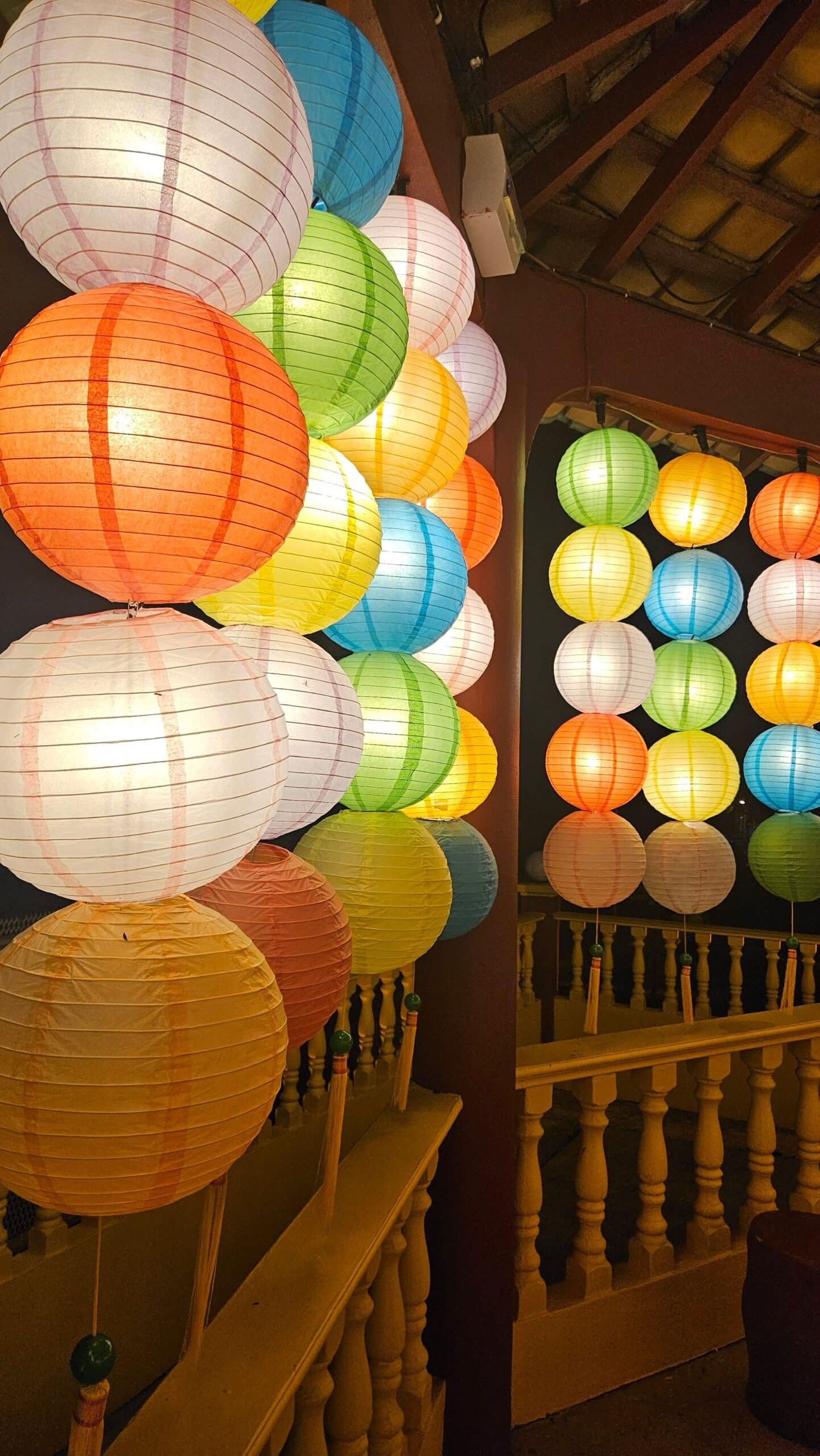
Wesak lanterns ,Vesak Koodu in the language detailed glowing structures made by hand from bamboo, wood and colored tissue paper. They are the visual sign of the Wesak festival in Sri Lanka, which honors the birth, enlightenment and passing away (Parinirvana) of Lord Buddha.
Deep Thoughts and Origins
Every part of a Wesak lantern has a spiritual message that comes from Theravada Buddhism.
The main reason for lighting a lantern is to show that darkness and confusion are being pushed away. It stands for the light of the Buddha’s Dhamma (teachings) shining on the world and helping people find peace and Nirvana.
Wesak lanterns are made with fragile materials: split bamboo (bata lali) thin wire and soft tissue paper (Vesak kola). They are meant to be outside where wind or rain will eventually break them. This shows a lesson about Anicca (impermanence) reminding people that all physical things will one day break down and disappear.
Step-by-Step Anatomy and Crafting Process
Creating a traditional Wesak lantern is a time-consuming, communal art form that brings families and neighborhoods together weeks before the festival.
1. Sourcing the Framework
Artisans harvest flexible bamboo or local reeds. They split the wood into thin, uniform strips using a heavy knife.
2. Tying the Skeleton
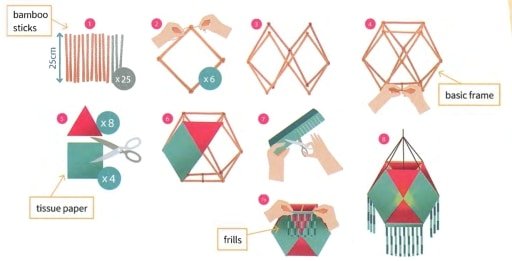
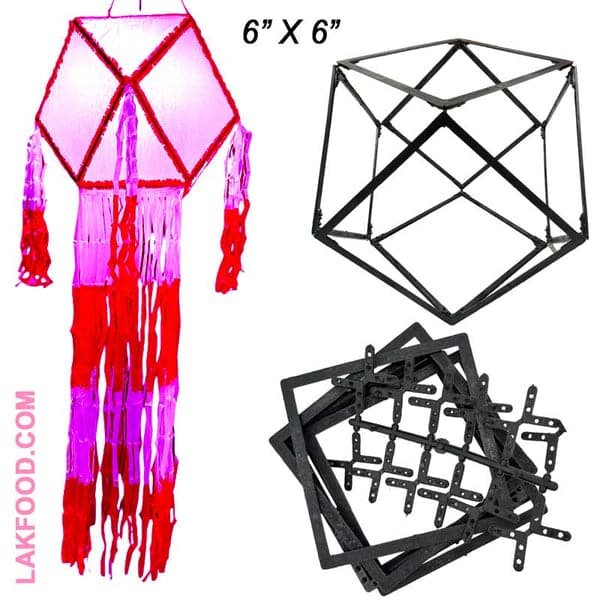
Crafters bend and cross the bamboo strips to form three-dimensional geometric shapes. They bind the joints together tightly using cotton thread or thin string.
3. Pasting the Paper Skin
Makers cut sheets of translucent tissue paper to match the geometric faces of the frame. They apply homemade flour-based paste to glue the paper down, creating the solid colored body of the lantern.
4. Adding the “Rella” (Frills)
The defining characteristic of a Sri Lankan lantern is the Rella. Crafters take long strips of tissue paper, fold them repeatedly, and make precise scissor cuts. When unfurled, this creates long, delicate, fringed borders and tails. These frills are glued to the edges and bottom points of the lantern, swaying gracefully in the night breeze.
5. Illumination
Historically, small clay oil lamps (mati pahana) or wax candles lit the insides of the lanterns. Today, safety concerns and modern convenience mean most people use electric bulbs or LED string lights.
Here's the guide to make Vesak Lantern correctly
Key Exhibition Locations in Sri Lanka
During the festival, whole cities transform into open-air light galleries. The most spectacular public displays can be found across a few distinct zones.
Colombo Festivities
The commercial capital offers the largest, most technologically advanced lantern zones.
- Bauddhaloka Mawatha: This major avenue is closed to vehicles so millions of pedestrians can walk past massive, competitive corporate lantern installations.
- Gangaramaya Vesak Kalapaya: Centered around the Beira Lake, this zone features floating lanterns, illuminated boats, and massive artistic structures suspended over the water.
Kandy and the Cultural Triangle
For a more historic atmosphere, visitors head to the hill country.
- Kandy Lakeside: Thousands of traditional handmade paper lanterns line the perimeter of the lake, reflecting off the water beneath the Temple of the Tooth Relic.
- Village Templates: Rural areas offer a deeply authentic look, where entire villages collaborate on single, monumental lanterns made entirely out of organic materials.
The Broader Vesak Landscape: Thoranas
While walking through lantern zones, travelers will also encounter Thoranas (massive pandols). These are towering, free-standing structures covered in tens of thousands of colored light bulbs.
Engineers use complex electronic sequencers to make the lights flash in mesmerizing patterns. The face of the Thorana features hand-painted illustrations detailing a specific Jataka Story (tales of the Buddha’s previous births). A narrator broadcasts the story over a public loudspeaker system throughout the night.
Practical Survival Tips for Visitors
Experiencing the festival requires strategic planning to safely navigate the immense crowds.
Pedestrian Mode
Major cities shut down arterial roads to vehicle traffic starting at dusk. Expect to walk long distances to see the best lantern clusters, so wear comfortable, broken-in footwear.
Dress Etiquette
You should dress modestly out of respect for the religious holiday. Keep your shoulders and knees covered. Wearing solid white clothing is highly recommended, as it allows you to blend in with the local devotees.
Food and Drink Restrictions
The island enforces a strict ban on the sale of alcohol, meat, and fish during the primary days of Wesak. High-end hotel bars will close, and grocery stores will seal off their liquor aisles.
The Dansala Experience
You do not need to worry about finding open restaurants. Neighborhood committees set up Dansalas (free food stalls) along every major road. They flag down passersby to give them free fried rice, noodles, ice cream, coffee, or herbal tea. Anyone is welcome to join the lines to experience this profound act of community charity.